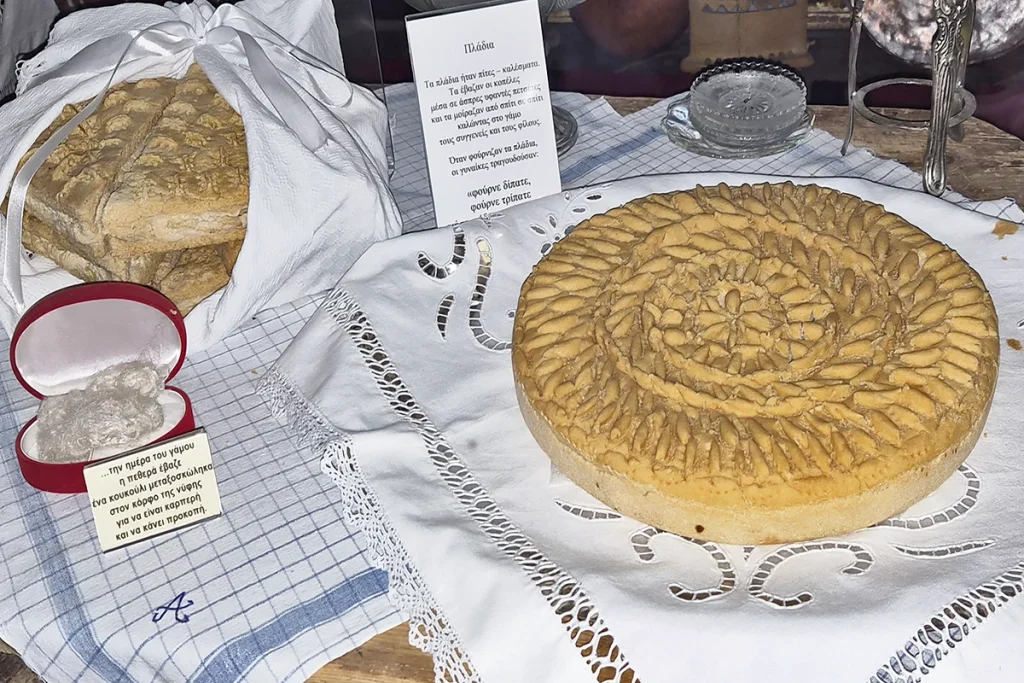
In the traditional Greek wedding, nothing was left to chance—and bread always played a central role. Among the most beautiful customs were the pladia: the wedding pies used as invitations.
The pladia were not simply baked goods. They served as the official invitation from the bride and groom. Young women of the household—friends and relatives—would place them in white woven cloths, often part of the bride’s handmade dowry, and deliver them from house to house. In this way, relatives and friends were invited to honor the ceremony and celebration with their presence.
The white cloth was not chosen at random; it symbolized purity, cleanliness, and a new beginning. The same was true of bread itself—a symbol of life, abundance, and blessing. When a household received a pladi, it accepted both the invitation and the honor that came with it.
The baker’s song
The process of kneading and baking carried a ritual character. Women would gather together, knead the dough with blessings, and sing as they placed the bread in the oven:
« O oven, burn strong, burn bright, bake the pladia till they turn golden. »
The song was not merely about good baking. It was a wish: that the couple’s life would “turn golden,” filled with joy, abundance, and sweetness.