BREAD MUSEUM
A Journey Through the Cycle of Life
The Bread Museum of Amfikleia is a specialised monographic museum dedicated to bread — the simplest and at the same time one of the most symbolic staples of Greek life. Here bread is presented not only as food, but also as memory, ritual and a daily act that connects generations.
In its exhibition rooms, visitors follow step by step the journey of wheat and bread: from cultivation and harvest to milling, kneading and baking. At the same time, they discover the nutritional and deeply symbolic significance of bread in the great moments of life, as well as throughout the cycle of the year — in the festivals, customs and rituals of Amfikleia.
The Bread Museum is not simply an exhibition space, but a place of knowledge and experience that invites visitors to see bread from a different perspective — as the result of labour, as an act of sharing, and as a blessing for prosperity and continuity.

MUSEUM HISTORY
The museum was inaugurated on 21 November 2003, on the feast day of the Presentation of the Virgin Mary, known locally as Panagia Mesosporitissa, the patron saint of the town.
Its establishment was based on systematic scholarly documentation and a museological study, with the decisive support of the Centre for Research of Greek Folklore of the Academy of Athens.
The collaboration with the Amfikleia Folklore and Dance Association “Dadiótiki Estia”, together with the use of the region’s rich collection of objects and its oral tradition, contributed to the creation of a monographic museum dedicated exclusively to bread and to the culture that surrounds it.
OUR VISION
The Bread Museum was born out of the need to preserve and highlight the relationship between people, the land and bread — a relationship that has shaped both the material and symbolic culture of the region.
Its aim is to serve as a place of knowledge, research and experience, passing on to younger generations a sense of respect for the land, for labour and for memory.
AMFIKLEIA
Nestled on the foothills of Mount Parnassus, Amfikleia has preserved its traditions and stories through the centuries. The cultivation of the land, the milling of grain and the baking of bread have long been integral parts of the daily life of its inhabitants.
The Bread Museum highlights this close relationship between place and tradition, offering a distinctive cultural and educational point of reference for the local community, for schools and for visitors from Greece and abroad.
THE COLLECTION
The collection includes agricultural tools, milling and bread-making equipment, household utensils, ceremonial breads, festive preparations, and objects reflecting everyday life.
Each object tells a small story from the cycle of wheat and human life.
From sowing and harvesting to kneading and baking in the wood-fired oven, the cycle of life is revealed—a journey that begins with wheat and ends up in bread.
THEMATIC SECTIONS
IN THE FIELD
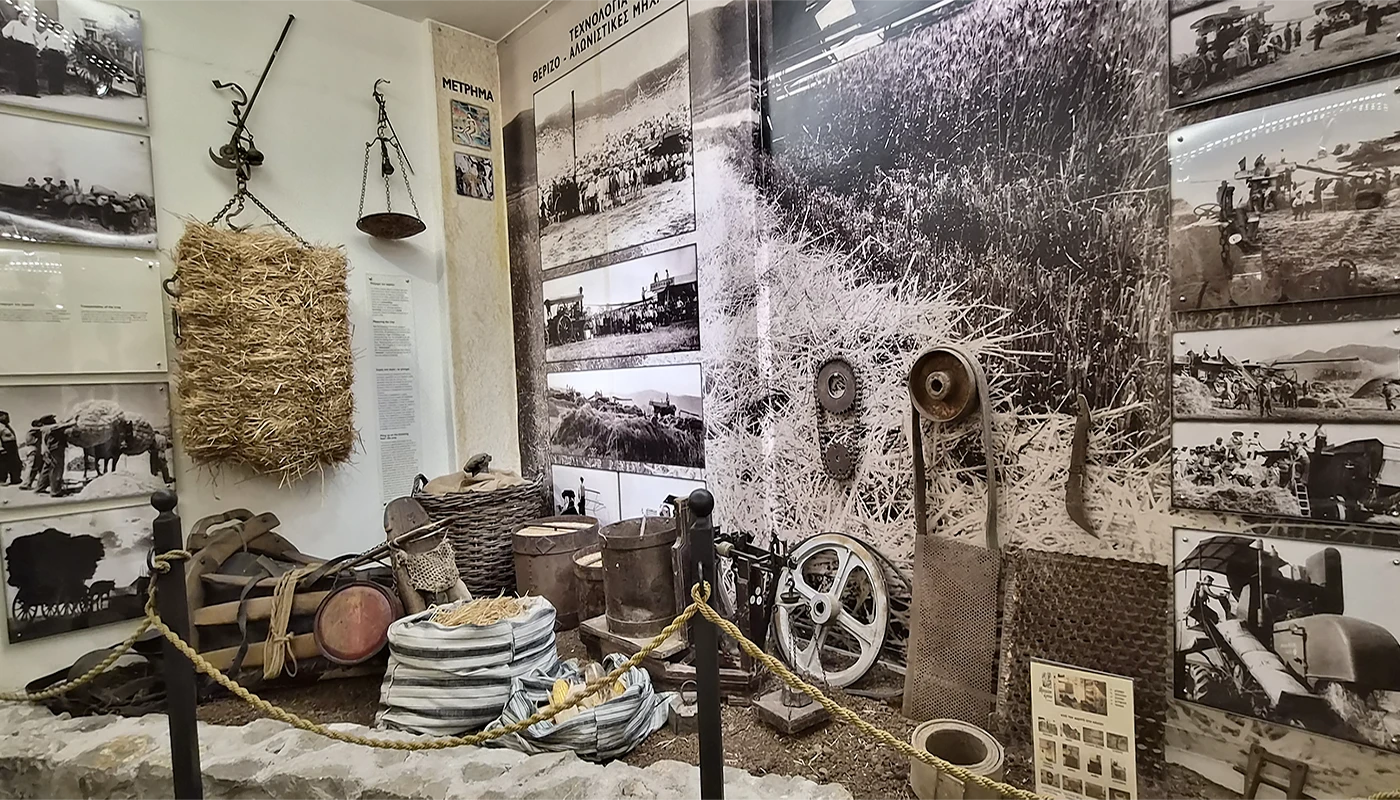
Ploughing, sowing, harrowing and threshing form the cycle of wheat cultivation.
With the plough the earth is opened, the seed is entrusted to the soil, the harrow covers it, and the harvest leads to threshing, where the grain is separated from the straw.
MEASURING THE HARVEST
After threshing and gathering the grain, the next step was measuring and weighing it in order to determine the yield of the year.
This process was carried out using traditional tools such as the statíras (balance scale) and weighing scales, while the grain was stored in woven baskets and storage bins.
KNEADING THE DOUGH
Before leaving the dough to rise, the housewife would make the sign of the cross over it, wishing that it would “take” and be blessed.
Hands, sourdough starter, the wooden kneading trough and patience came together in an act of care and creation.
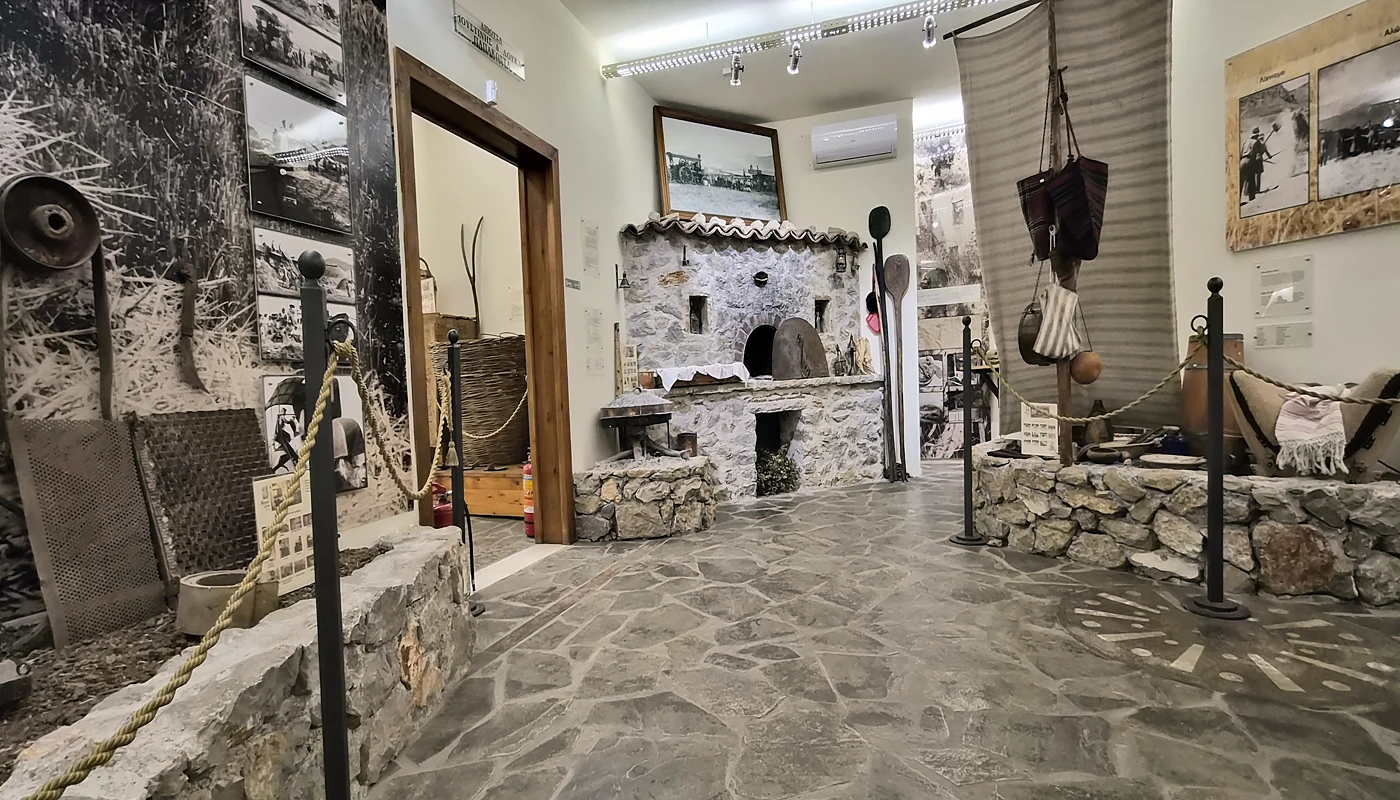
BAKING THE BREAD
The oven was an integral part of the household and of daily life.
It was there that the family’s bread was baked — the fruit of labour and care. Baking was a moment of anticipation and creation.
The smell of freshly baked bread was a sign of security and abundance.
THE CYRCLE OF LIFE
Bread accompanies people from birth to the end of life.
In the customs of Amfikleia, bread blesses, protects and symbolizes continuity.
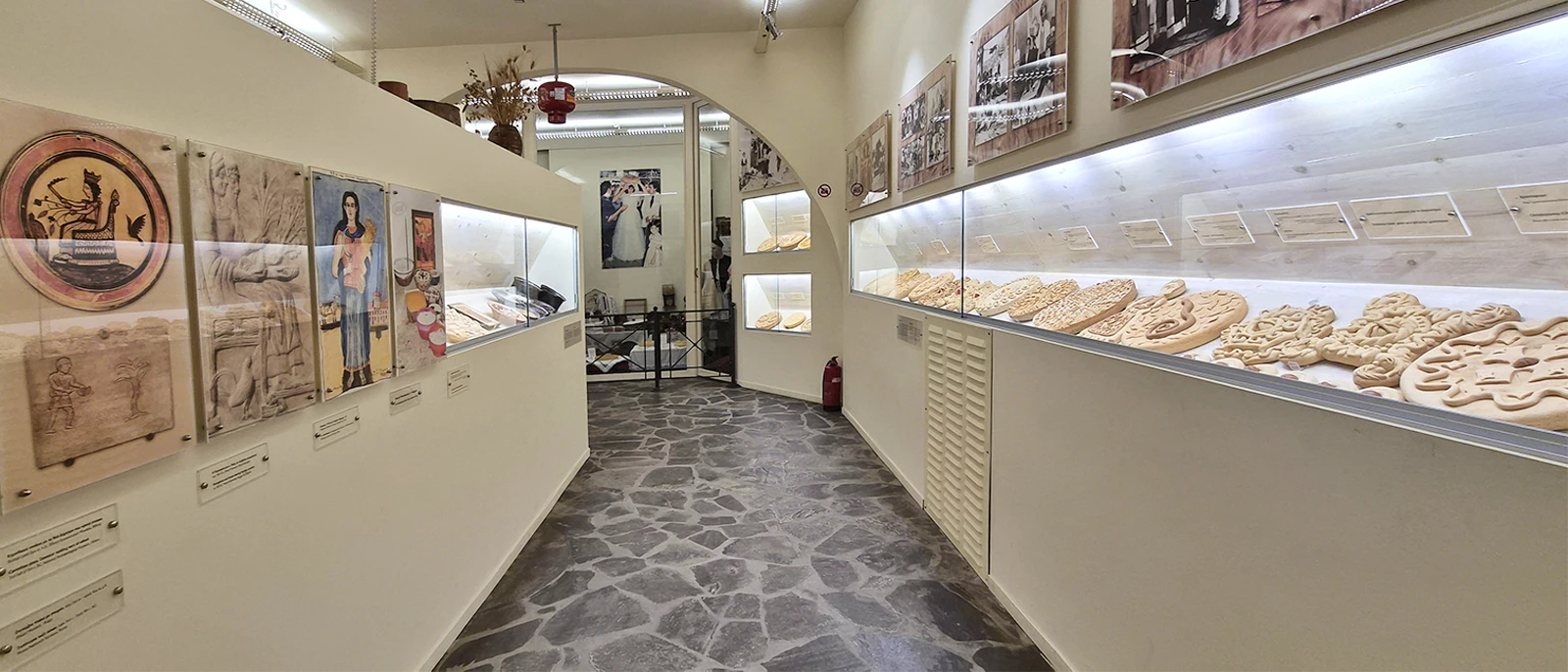
At weddings, baptisms and memorial services, bread is not simply food; it is a blessing, a symbol of community and an act of sharing. Each decorated bread tells the story of a moment in life.
RITUAL BREADS
From prosphora (liturgical bread) and koliva to the polysporia of Panagia Mesosporitissa, bread takes on a sacred character.
The symbolism of the dough, the carved markings and the decorations convey wishes for fertility, health and a good harvest.
Tradition preserves practices with deep roots in time, where food becomes prayer.
WEDDING ROOM
In the bridal chamber, bread symbolised fertility and abundance.
Decorated breads accompanied the customs of the wedding, offering wishes for the newly married couple to “take root” and thrive.
The dough decorations revealed wishes hidden in shapes and symbols.